
Every Mycopunk element with damage multipliers, saturation rules, status lifetimes and what Fire, Shock, Acid, Decay, Rot and Cryo actually do.
Mycopunk What Do Elements Do: What Each One Does
Mycopunk has seven elements: Fire, Shock, Acid, Decay, Rot, Cryo and Normal. Every weapon, grenade and enemy attack applies one of them, and each element builds to a five-stage saturation bar that triggers a status effect when it fills.
Every Mycopunk element with damage multipliers, saturation rules, status lifetimes and what Fire, Shock, Acid, Decay, Rot and Cryo actually do.
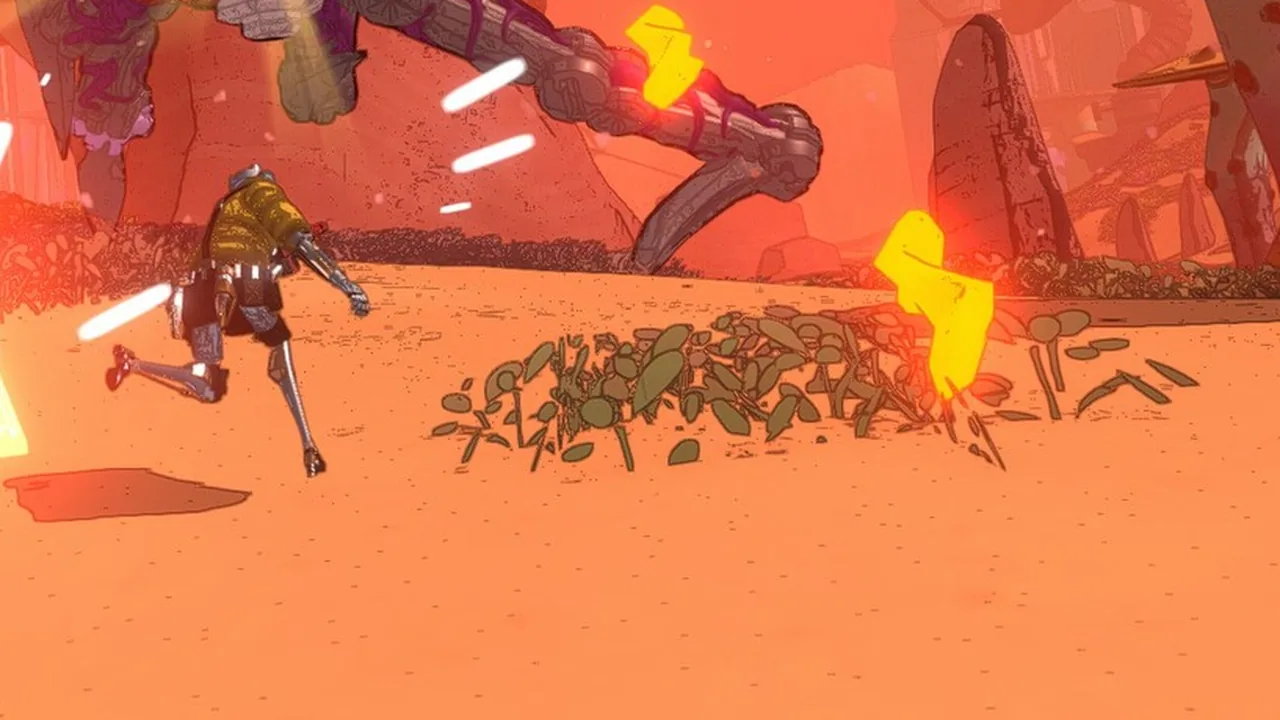
Element reference
| Element | Verb | Damage multiplier | Full-saturation lifetime | Colour |
|---|---|---|---|---|
| Fire | Ignite | ×1.0 | 3 s | #ff6f2a |
| Shock | Electrocute | ×1.0 | 3 s | #6be6ff |
| Acid | Corrode | ×1.0 | 3 s | #a8ff2e |
| Decay | Decay | ×1.2 | 4 s | #d78fff |
| Rot | Rot | ×1.35 | 60 s | #a4b020 |
| Cryo | Freeze | — | — | #6b89ff |
| Normal | — | — | — | — |
How saturation works
Each hit adds 0.1 × the effect amount to the target's saturation, and the bar has five stages. Saturation decays at 0.3 per second after a 3-second delay, so a slow-firing weapon cannot build a stack on its own.
When the bar fills, the element applies its status and deals 10 damage to enemies. On players, a fully saturated element ticks for 0.165 damage per tick. All elemental statuses stop health regeneration while active.
Fire, Shock and Acid: the damage trio
These three are mechanically identical: ×1.0 multiplier, 3 s lifetime, 10 damage on saturation, 160 total damage over the 3-second window. The difference is which upgrades and enemies interact with them.
- Fire — the Jackrabbit's default element; ignition upgrades are the most common in the game
- Shock — the Accelerator's element, and the one with the most chain-lightning upgrades
- Acid — the Globbler's element, and the one that pairs with corrosion-based range and damage nodes
Decay: the damage amplifier
Decay is the outlier of the trio: ×1.2 multiplier and a 4-second lifetime. A decayed target takes +20% damage from all sources, and a decayed body part that drops below 10% health falls off the enemy entirely. That part mechanic is why decay weapons feel like disassembly tools.
Rot: the long burn
Rot has the highest multiplier (×1.35) and a 60-second saturation lifetime, twenty times longer than the other primaries. A rotted target stays rotted for a minute, which makes it the element for missions where you are fighting a boss with phases rather than a room of grunts.
Cryo: the control element
Cryo is the only element whose status is control rather than damage: it freezes. It was added with the Snowball Grenade in 1.0 and has no damage multiplier listed in the tuning table, because the payoff is time rather than numbers.
Upgrades that deliberately exclude cryo are marked in their descriptions, which is a change the developers made when the element was introduced.
Normal is an element
The game treats Normal as an element for interaction purposes — a Normal-damage weapon does not apply a status, but it counts as an element for conversion nodes like Cosmic Microwave, which rewrites all outgoing damage to a chosen element.
Player-side effects
Elements work on you too. Fire can ignite you, Shock can electrocute you, and several upgrades key off being in a status: Ignition Recharge refunds ammo while ignited, Shocking Adrenaline speeds up the Carver after you are electrocuted, and Corrosive Coating extends range after you are corroded.
FAQ
What is the best element in Mycopunk?
There is no best element, but the numbers are clear: Rot has the highest multiplier (×1.35), Decay the best amplifier (+20% damage taken) and Cryo the only control effect.
How many hits to apply an element?
Ten, if each hit applies 1.0 element. The bar gains 0.1 per unit of element amount, so a weapon applying 3 element per hit fills it in about four hits.
Does decay stack with other elements?
Yes. Decay is a damage-taken multiplier, so any other element applied to a decayed target benefits from it.
Still weighing options? The full weapon roster lines up every gun, grenade and gadget side by side, and the upgrade grid basics explain how the nodes on each one are laid out.
Sources
Threat, mission, element and resource values were read from the Mycopunk 1.0 build and cross-checked against the official patch notes and the Steam store page. Where a rule is only described in player-written notes, the Steam guide index is the second source.
More Mycopunk Guides
How employee upgrades work in Mycopunk: six tiers, 5/9/14/18 skill-point gates, per-class node counts, drop-only nodes and the Amalgamation exclusive.
Every Mycopunk employee with mobility and utility abilities, skin counts, unlock conditions, and what each upgrade tree actually changes.
All 38 Mycopunk enemies: grunts, brutes, abominations and bosses with shell health, leg and arm counts, overclock chances and the part system explained.
Mycopunk's heavy slot holds one weapon, the A16 Beam Ripper. Full 1.0 stat block, falloff numbers, heavy upgrade pool and unlock level.
The hidden Mycopunk achievements with exact conditions: Roachard waving, killing a teammate, the Hornet slap, the fall deaths, Ground Zero and X11-B.
How Mycopunk works: the mission loop, controls, loadout slots, hex upgrades, elements, threat levels and a first-hour checklist for new players.
What the Mycopunk hub contains after the 1.0 rework: mission table, crafting bench, 129 Fulfillments, Lottery Larry, Starrunner, the wheel and the couch.
Every Mycopunk mission with unlock level, region, category and rewards, from The Fungal Moon and Regulated Rampage to Ouroboros and X11-B.